Digital Art is distinct from computer art, but the early history of both technological art forms derive back to the same origins. The 1960s were a particularly important decade in the history of Digital Art, as artists started experimenting with computers. John Hales Whitney, Sr a composer, inventor, and computer animator developed the world’s first computer-generated arts by using mathematical functions to transform his work into something visual.
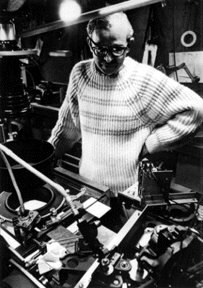
A pioneer in computer animation. He operated one of the first computer-graphics engines. A mechanical analog computer built from surplus World War II anti-craft guidance hardware. The camera shown in the upper left corner aims toward the light of the apparatus and paints the film with light.
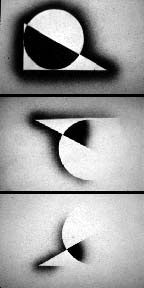
Whitney made two dozen animation films in 8mm. A time-lapse of the eclipse, and several drawn variations in 16mm the film exercise.
E.A.T(Experiments in Art and Technology)
Engineers Billy Kluver, Fred Waldhaven, and artists Robert Rauschenberg, and Robert Whiteman organized a group called EAT, (Experiments in Art and Technology). Their goals were on doing a series of installation and performances. It involved the usage of electronic innovation systems. Video projection, sound transmission, and Doppler Sonar. It created a new expression of art.
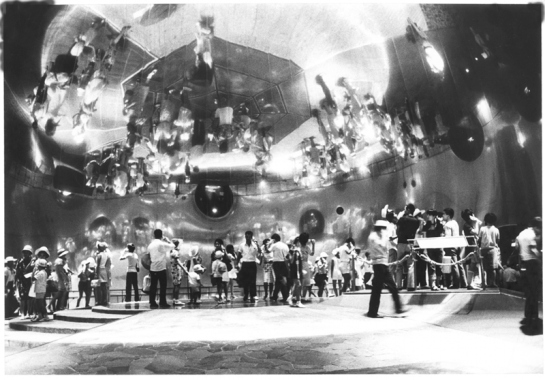
Mirror Dome Room at the Pepsi Pavilion, at Expo ’70, Osaka Japan, Photo Shunk-Kender
As electronic technology takes a-leaping development in the twentieth-first century. Artists have explored other avenues in the expression of art. At one time, the central theme was on sketch pads, pencils, paints, and paintbrushes now, artists test their medium on video protection, computer-graphics, lights, sounds, and pixels.
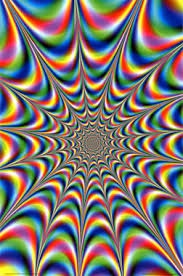
Aaron Art Prints
Contemporary Art and Technology
Many artists claim themselves to being contemporary artists that their artwork would be an alive expression of the present period. Technology has become a new medium for artists to express their creativity. Many contemporary artists have included internet and digital art in their artwork.
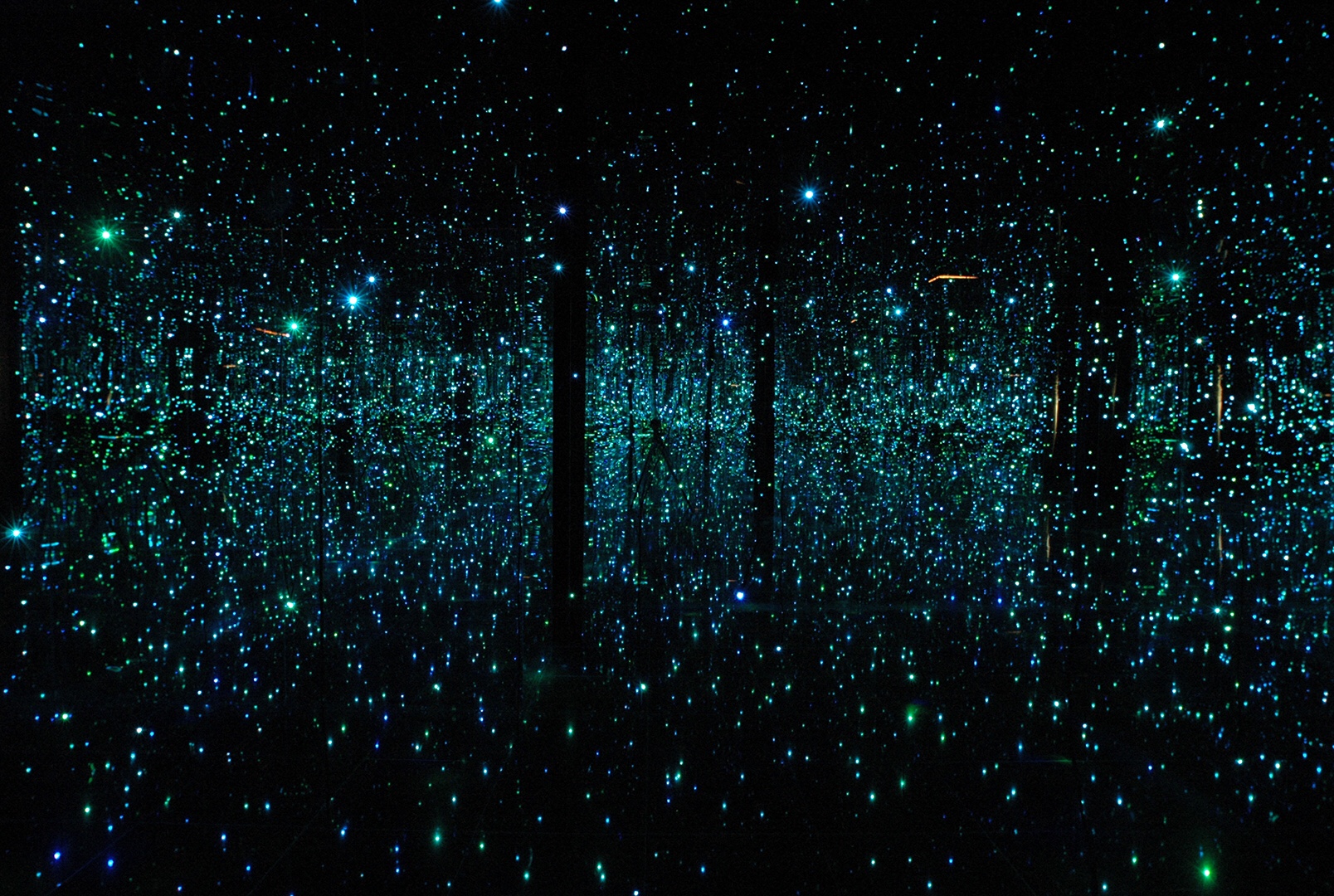
Yayoi Kusama’s You Who Are Getting Obliterated in the Dancing Swarm of Fireflies is one of the artist’s more whimsical works. Inspired by a Japanese folktale about a person in a field with 10,000 fireflies, Kusama’s work brings the fairy tale to life. Beginning with drawings and paintings, Yayoi Kusama’s work transformed from 2-D pieces to large-scale installations, symbolic of the obsessive and massive nature of her ideas. Subsequently, Kusama’s art began to take large forms and often covers and utilizes entire rooms and spaces.
The piece is a dark room lined with mirrors on every surface and strands of looping LED lighting suspended from the ceiling. This deceptively small room feels as if it’s a vast, infinite galaxy of lighting and allows the viewer to enter and be surrounded, or obliterated by Kusama’s fireflies.
 Yolanda’s Blogs